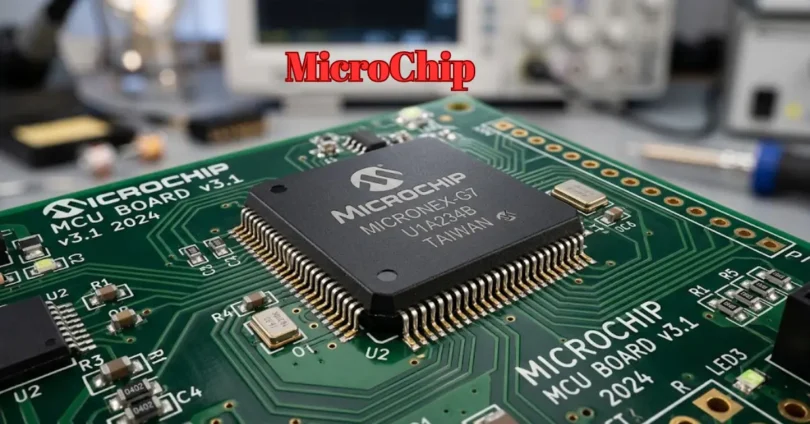
A MicroChip is one of the most important parts of modern electronic technology. These tiny components help devices process information, control functions, store data, and perform tasks with speed and accuracy. From smartphones and computers to cars, medical equipment, and smart home devices, MicroChips are used in many areas of everyday life. As technology continues to develop, MicroChip technology is also becoming more powerful, efficient, and important for building the next generation of connected and intelligent devices.
Where MicroChips Are Used Today and its Process
MicroChips are used in many modern devices and industries, including:
- Smartphones and tablets
- Computers and laptops
- Cars and transportation
- Smart home devices
- Medical equipment
- Industrial machines
- Gaming consoles
- Wearable devices
- Security systems
- Communication equipment
- Smartphones and Tablets: MicroChips help manage processing, memory, sensors, cameras, and other important functions.
- Cars and Transportation: They control systems such as engine functions, safety features, sensors, navigation, and entertainment.
- Smart Home Devices: MicroChips allow smart TVs, thermostats, appliances, cameras, and other devices to process commands and perform automated tasks.
- Medical Equipment: They are used in monitoring devices and electronic medical equipment to process information and control different functions.
- Industrial Machines: MicroChips help operate automated machinery, sensors, control systems, and production equipment.
- Gaming and Wearable Devices: They support processing, graphics, sensors, connectivity, and other functions in gaming consoles, smartwatches, and fitness devices.
MicroChips have become a key technology behind many modern products. Their applications continue to expand as electronic devices become smarter, smaller, and more connected.
Different Types of MicroChips and Their Roles
MicroChips come in different types, and each type is designed to perform specific tasks. The main types include:
- Microprocessors
- Microcontrollers
- Memory Chips
- System-on-Chip (SoC)
- Graphics Processing Units (GPUs)
- Sensor Chips
1. Microprocessors
- Microprocessors are designed to handle general computing tasks. They process instructions, run software, and manage operations in devices such as computers, laptops, and other advanced electronic systems.
2. Microcontrollers
- Microcontrollers combine processing, memory, and input/output functions on a single chip. They are commonly used in appliances, vehicles, smart devices, and industrial control systems where specific tasks need to be managed efficiently.
3. Memory Chips
- Memory chips are used to store information and instructions. They can provide temporary or long-term data storage and are found in computers, smartphones, cameras, and many other electronic devices.
4. System-on-Chip (SoC)
- A System-on-Chip combines several important components into one compact chip. It can include processing, graphics, memory controllers, and communication functions, making it useful for smartphones, tablets, smart devices, and other compact electronics.
5. Graphics Processing Units (GPUs)
- GPU chips are designed to process images, videos, graphics, and other visual data. They are widely used in computers, gaming systems, mobile devices, and applications that require high levels of parallel processing.
6. Sensor Chips
- Sensor chips collect information from the surrounding environment, such as temperature, movement, light, or pressure. They are used in smartphones, vehicles, wearable devices, medical equipment, and smart home technology.
Different types of MicroChips perform specialized roles that help modern devices process data, control functions, store information, and operate efficiently.
Important Features of Modern MicroChips
Modern MicroChips are designed to provide fast, reliable, and efficient performance in different electronic devices. Their advanced features allow them to handle complex tasks while using limited space and power.
- Compact Size
- Fast Processing
- Low Power Consumption
- High Reliability
- Advanced Integration
- Better Connectivity
Modern MicroChips combine compact design, fast processing, low power use, reliability, and advanced integration to support today’s electronic devices.
Why MicroChips Matter in Modern Technology
MicroChips matter in modern technology because they provide the basic processing and control needed for many electronic systems. Their compact size allows manufacturers to create smaller and lighter devices, while fast processing helps electronics handle information and respond to commands quickly. Their low power consumption is especially useful for smartphones, laptops, and wearable devices because it can support longer battery life. High reliability also allows MicroChips to work consistently in products that people use every day, from home appliances to vehicles and industrial equipment. In addition, advanced integration allows several functions to be combined into a single chip, reducing the space and hardware required inside a device. Together, these features make MicroChips an important part of modern electronics and support the development of smarter, faster, and more efficient technology.
Common FAQs About MicroChip
Here are some common questions and clear answers to help you understand MicroChip technology better.
What is the difference between a MicroChip and a circuit board?
A MicroChip is a tiny electronic component that performs specific functions, while a circuit board connects chips and other components so they can work together.
How are MicroChips manufactured?
MicroChips are generally produced on semiconductor materials such as silicon through highly precise manufacturing processes that create microscopic electronic circuits.
Why are silicon materials commonly used for MicroChips?
Silicon has useful semiconductor properties that allow manufacturers to control electrical signals and build very small electronic circuits.
Can one MicroChip perform multiple functions?
Yes. Some advanced chips combine several functions into one component, reducing the need for separate electronic parts.
What factors affect MicroChip performance?
Performance can be affected by factors such as architecture, clock speed, number of processing units, memory support, and the design of the overall system.
What is chip fabrication?
Chip fabrication is the manufacturing process used to create the tiny electronic structures and circuits found inside a MicroChip.
Why are smaller MicroChips useful?
Smaller chips can help manufacturers create compact electronic products while allowing more components and functions to fit into limited space.
Can MicroChips be customized for specific products?
Yes. Some chips are specifically designed or configured for particular applications, allowing them to meet specialized performance and functional requirements.
How does temperature affect a MicroChip?
Excessive heat can affect chip performance and reliability, which is why electronic systems often use suitable thermal management.
Why is semiconductor technology important for MicroChips?
Semiconductor technology makes it possible to create extremely small electronic circuits that can control and process electrical signals inside modern devices.
Conclusion
MicroChip technology is a fundamental part of modern electronics, supporting the operation of devices across computing, communication, transportation, healthcare, and many other fields. As semiconductor technology continues to develop, MicroChips are becoming more capable and adaptable, helping manufacturers create smaller, smarter, and more efficient electronic systems. Their continued development will remain important as technology moves toward greater connectivity, automation, and advanced digital applications.