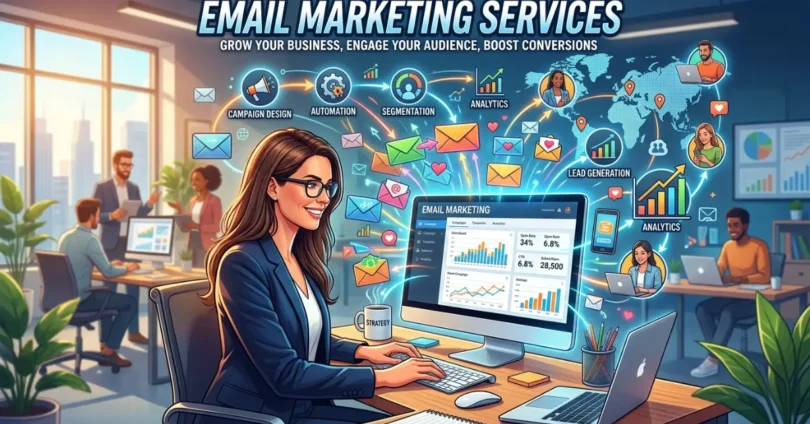
Email Marketing Services help businesses reach their customers directly through email. They allow companies to send updates, promotions, and newsletters to their audience. Using these services, businesses can grow faster, build trust with customers, and increase sales. Email marketing is simple, cost-effective, and works for small and big businesses alike.
How Email Marketing Services Work
Email Marketing Services work in a few easy steps. First, businesses collect email addresses from their customers or website visitors. Next, they create an email campaign using a service platform. This email can include news, offers, or updates. Then, the service sends the email to all the selected people at once. Finally, businesses track the results to see how many people opened the email, clicked on links, or took action. This helps them improve future campaigns and connect better with their audience.
Types of Email Marketing Services
Email marketing services come in different types to help businesses connect with their audience in the best way.
- Promotional Emails: Share special offers, discounts, or new products to encourage purchases.
- Newsletter Emails: Regular updates about the company, news, or helpful tips to keep customers engaged.
- Welcome Emails: Sent to new subscribers to introduce the business and build trust.
- Automated Emails: Pre-planned emails sent automatically based on customer actions or dates, like birthdays.
- Transactional Emails: Sent after a specific action, such as order confirmation or password reset.
Using the right type of email helps businesses stay connected and increase customer engagement.
Key Features of Email Marketing Services
Email Marketing Services offer important features that make sending emails easy and effective for businesses.
- Email Templates: Ready-made designs to create professional emails quickly.
- Automation Tools: Send emails automatically based on schedules or customer actions.
- List Management: Organize and segment your email contacts for better targeting.
- Analytics & Reporting: Track email performance like opens, clicks, and conversions.
- Personalization Options: Customize emails with customer names or preferences.
- A/B Testing: Test different email versions to see which performs better.
These features help businesses save time, reach the right audience, and improve results with every email campaign.
How to Choose the Best Email Marketing Services
Choosing the right email marketing service can make your campaigns more effective and easier to manage.
- Ease of Use: Pick a platform that is simple and user-friendly for creating and sending emails.
- Pricing Plans: Check if the service fits your budget, whether it’s free, pay-as-you-go, or subscription-based.
- Features Offered: Look for automation, templates, list management, analytics, and personalization options.
- Customer Support: Ensure there is reliable help available via chat, email, or phone.
- Integration Options: The service should connect easily with your website, CRM, or other tools.
- Deliverability Rates: Choose a service that ensures your emails reach your customers’ inboxes.
Selecting the right service helps your business save time, improve results, and grow faster with email marketing campaigns.
Email Marketing Strategy That Gets Results
A strong email marketing strategy helps businesses reach their goals and get better results from every campaign. To create an effective strategy, follow these simple steps:
- Define Your Goal: Decide what you want from your emails, like more sales, website visits, or newsletter sign-ups.
- Know Your Audience: Understand who your customers are, what they like, and what problems they want to solve.
- Segment Your Email List: Divide your audience into smaller groups based on interests, location, or purchase history to send more relevant emails.
- Create Valuable Content: Write emails that give useful information, offer special deals, or share updates that your customers care about.
- Choose the Right Timing: Send emails at times when your audience is more likely to open and read them.
- Use Personalization: Include customer names, preferences, or past purchases to make emails feel personal.
- Track and Analyze Results: Check open rates, click-through rates, and conversions to see what works and what doesn’t.
- Test and Improve: Try A/B testing on subject lines, content, or images to find the best performing emails.
By following this strategy, businesses can increase engagement, boost sales, and build strong relationships with their customers. A well-planned email strategy ensures every email counts and brings measurable results.
Cost and Pricing of Email Marketing Services
The cost of email marketing services depends on the features, number of subscribers, and the platform you choose. There are different pricing options to fit small businesses as well as large companies.
- Free Plans: Many email marketing services offer free plans for beginners. These usually allow sending a limited number of emails per month and have basic features like templates and list management. Free plans are good for small businesses or testing email campaigns.
- Pay-As-You-Go Plans: Some platforms charge based on the number of emails you send. This is ideal if you only send emails occasionally or want more control over spending.
- Subscription Plans: Most businesses use monthly or yearly subscription plans. Prices depend on the number of subscribers and included features like automation, analytics, and advanced templates.
- Enterprise Plans: Large companies with thousands of subscribers often choose enterprise-level services. These plans include advanced automation, dedicated support, and higher deliverability rates.
- Additional Costs: Some platforms may charge extra for premium templates, extra contacts, or integrations with other software.
Email marketing can be very cost-effective, and businesses can choose a plan that fits their needs. Even with a small budget, the right service can help grow sales and connect with customers efficiently.
Email Marketing Services for Beginners
Email marketing is easy to start, even for beginners. With the right approach, anyone can send effective emails and reach their audience. Here are the key steps for beginners:
Choose a Simple Platform: Pick an email marketing service that is easy to use and offers basic features like templates, list management, and automation. Popular beginner-friendly platforms include Mailchimp, Sendinblue, and ConvertKit.
Build Your Email List: Start collecting emails from website visitors, customers, or social media followers. Make sure you get permission before adding someone to your list.
Create Your First Email: Use ready-made templates to design professional-looking emails. Keep the message simple, clear, and helpful for your audience.
Plan Your Email Campaigns: Decide how often you will send emails. Beginners can start with one email per week or bi-weekly updates.
Track Performance: Check how many people open your emails, click on links, or take action. This helps you improve your future emails.
Follow Best Practices: Avoid sending too many emails, personalize messages when possible, and make emails mobile-friendly.
By starting with these simple steps, beginners can learn quickly, connect with their audience, and grow their business using email marketing services.
Common FAQs About Email Marketing Services
Some faqs of Email Marketing Services.
What is the difference between bulk emails and transactional emails?
Bulk emails are sent to many people at once for promotions, while transactional emails are triggered by a specific action like order confirmation.
Can small businesses benefit from email marketing services?
Yes, small businesses can reach local or online customers, grow their audience, and increase sales even with a small budget.
Is email marketing legal?
Yes, as long as businesses follow rules like getting permission to send emails and including an unsubscribe option.
What is email segmentation?
Segmentation means dividing your email list into smaller groups based on interests, behavior, or location to send more relevant emails.
How often should businesses send emails?
It depends on the audience, but generally 1–2 emails per week or monthly newsletters work best to avoid annoying subscribers.
What is email deliverability?
Deliverability is the ability of your email to reach a subscriber’s inbox instead of the spam folder. High deliverability ensures better campaign results.
Can email marketing increase website traffic?
Yes, emails can include links to your website, blog posts, or product pages, driving more visitors online.
What is email automation?
Email automation lets businesses send pre-scheduled emails or trigger emails based on subscriber actions without manual sending each time.
Do email marketing services offer analytics?
Yes, most services provide performance reports showing opens, clicks, conversions, and other important metrics.
Can email marketing improve customer loyalty?
Yes, by sending personalized content, updates, and offers, businesses can build stronger relationships and encourage repeat purchases.
Conclusion
Email Marketing Services are a powerful tool for businesses of all sizes. They help companies connect directly with customers, share updates, and promote products or services effectively. With the right strategy, features, and tools, email marketing can increase engagement, boost sales, and build lasting customer relationships. By choosing the best service, planning campaigns carefully, and following best practices, businesses can get better results while saving time and costs. In today’s digital world, email marketing remains a simple, cost-effective, and highly effective way to grow any business.