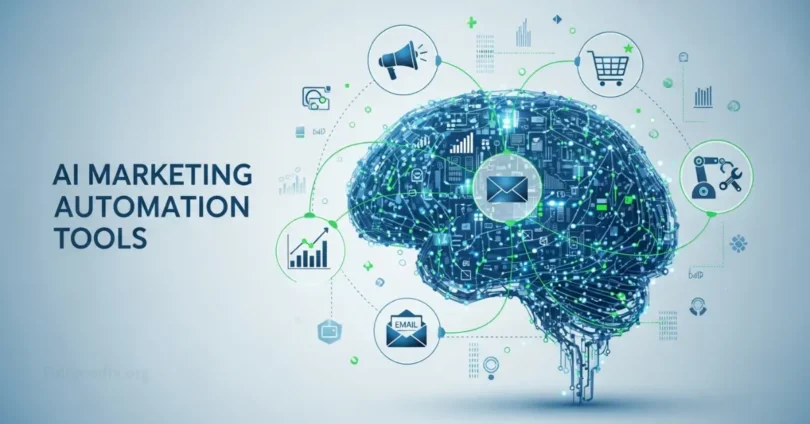
AI Marketing Automation Tools help businesses save time and improve their marketing results. These tools use artificial intelligence to automate tasks like sending emails, posting on social media, tracking leads, and analyzing data. With the right AI marketing tool, businesses can reach the right audience, create personalized campaigns, and grow sales without spending too much time or effort.
Key Features to Look for in AI Marketing Tools
Key Features to Look for in AI Marketing Tools help you choose the best tool for your business. Look for tools that can automate emails and segment your audience easily. AI content creation for blogs, social media posts, and ads is important. Social media scheduling and analytics should be included. Predicting customer behavior and integrating with your existing CRM makes campaigns smarter and more effective.
Top AI Marketing Automation Tools in 2026
AI marketing tools help businesses run smarter campaigns and save time. Here are the top tools you can use in 2026:
- HubSpot AI: Smart email automation, CRM integration, and personalized campaigns.
- Marketo Engage: Create large-scale personalized marketing campaigns easily.
- ActiveCampaign AI: AI-powered customer engagement and lead tracking.
- Mailchimp AI: AI insights for email marketing and audience targeting.
- Drift AI: AI chatbots for lead conversion and customer interaction.
- Sendinblue AI: Email campaigns, SMS automation, and marketing analytics.
- Salesforce Pardot AI: AI-driven lead management and campaign reporting.
- Omnisend AI: E-commerce automation with AI personalization.
These tools provide automation, analytics, and personalization to make marketing easier and more effective.
How to Choose the Right AI Marketing Tool
Choosing the right AI marketing tool is very important for your business success. Here are the main steps to make the best choice:
- Define Your Marketing Goals: Decide what you want to achieve. Are you focusing on email campaigns, social media posts, lead generation, or sales growth? Clear goals make it easier to choose the right tool.
- Check Ease of Use: The tool should have a simple dashboard and easy setup. If it is too complex, your team may struggle to use it effectively.
- Compare Features: Look for features that match your needs: email automation, AI content creation, social media scheduling, analytics, and CRM integration.
- Consider Pricing: Analyze pricing plans and check if the features justify the cost. Many tools offer free trials to test before buying.
- Integration with Existing Tools: Ensure the AI tool works smoothly with your current systems like CRM, e-commerce platforms, or social media accounts.
- Read Reviews and Case Studies: Learn from other users’ experiences. Reviews and case studies can give insights into real results and tool reliability.
- Trial and Test: Start with a small campaign or a trial period. This helps you see how the tool performs and if it suits your business needs.
By following these steps, you can select an AI marketing tool that fits your goals, budget, and business workflow perfectly.
Steps to Implement AI Marketing Automation
Implementing AI marketing automation can make your campaigns smarter and save time. Follow these simple steps:
- Identify Tasks to Automate: Look at your daily marketing tasks and decide which ones can be automated. Examples include sending emails, posting on social media, and lead tracking.
- Choose the Right AI Tool: Pick a tool that fits your business goals, budget, and required features. Consider ease of use, integrations, and customer support.
- Set Up Campaigns: Create your campaigns in the tool. Schedule emails, design social media posts, and upload content. Use AI recommendations for personalization.
- Test Campaigns: Run a small test for each campaign to check performance. Monitor open rates, click rates, and engagement.
- Track and Analyze Results: Use the tool’s analytics dashboard to measure performance. Look for trends and insights to improve future campaigns.
- Optimize Regularly: Adjust your campaigns based on AI feedback. Update content, change schedules, and improve targeting to get better results.
- Train Your Team: Make sure your marketing team understands how to use AI tools effectively. This ensures campaigns run smoothly and deliver maximum results.
By following these steps, your business can successfully implement AI marketing automation and improve efficiency, engagement, and sales.
Benefits of Using AI Marketing Automation
AI marketing automation offers many advantages for businesses of all sizes. Here are the main benefits:
- Saves Time: Automating repetitive marketing tasks like sending emails, posting on social media, and tracking leads saves a lot of time for your team.
- Improves Targeting: AI analyzes customer data and predicts behavior. This helps you reach the right audience with the right message at the right time.
- Increases Sales: Personalized campaigns created by AI are more likely to engage customers and convert them into buyers, boosting sales effectively.
- Reduces Costs: With automation, businesses spend less on manual work, reducing marketing expenses while increasing productivity.
- Provides Easy Analytics: AI tools track campaign performance and provide insights in easy-to-read dashboards. This helps businesses make smarter decisions.
- Enhances Customer Experience: By sending personalized messages and timely offers, AI makes customers feel valued, improving loyalty and satisfaction.
- Scales Marketing Efforts: AI allows businesses to manage multiple campaigns at the same time without extra effort, making growth easier.
Using AI marketing automation helps businesses work smarter, save resources, and achieve better marketing results with less effort.
Future of AI Marketing Automation
The future of AI marketing automation is very exciting and full of new possibilities. Here’s what businesses can expect:
- More Creative Automation: AI will not only handle repetitive tasks but also help create content like blogs, ads, and social media posts automatically.
- Better Predictive Analytics: AI will predict customer behavior more accurately, helping marketers plan campaigns that reach the right people at the right time.
- Integration with Other AI Tools: Marketing automation will work with chatbots, voice assistants, and other AI technologies to provide a seamless customer experience.
- Smarter Personalization: AI will offer even more personalized recommendations and offers based on individual customer preferences.
- Wider Adoption by Small Businesses: As tools become easier and more affordable, small businesses will also benefit from AI marketing automation.
- Real-Time Optimization: AI will continuously analyze campaigns and make real-time improvements, ensuring higher engagement and better results.
- AI-Powered Customer Insights: Businesses will get deeper insights into customer needs and trends, making marketing smarter and more effective.
The future shows that AI marketing automation will continue to make campaigns faster, smarter, and more personalized, helping businesses grow with less effort.
Tips to Maximize AI Marketing Automation
To get the best results from AI marketing automation, follow these simple and effective tips:
- Regularly Review AI Recommendations: AI tools provide suggestions for campaigns. Check them often and use the insights to improve your marketing.
- Keep Content Personalized and Updated: Always provide content that is relevant to your audience. Update emails, ads, and posts regularly to match customer interests.
- Test Campaigns Frequently: Try different messages, timings, and designs. Testing helps you find what works best for your audience.
- Combine AI with Human Creativity: While AI can automate tasks, human creativity adds a personal touch that attracts more customers.
- Train Your Team: Make sure everyone understands how to use AI tools properly. A trained team can run campaigns efficiently and achieve better results.
- Monitor Analytics and Adjust: Track performance metrics like open rates, click rates, and conversions. Adjust campaigns based on these insights for better outcomes.
- Start Small and Scale Gradually: Begin with a few campaigns, understand how AI works, and gradually expand to more campaigns as you gain confidence.
By following these tips, businesses can fully utilize AI marketing automation, improve engagement, increase sales, and save time.
Common FAQs about AI Marketing Automation Tools
Here are some faqs of AI Marketing Automation Tools.
What types of businesses can use AI marketing automation?
AI marketing tools are suitable for small, medium, and large businesses across industries like e-commerce, education, healthcare, and services.
Can AI marketing tools improve customer engagement?
Yes, AI tools analyze user behavior to send timely messages, personalized offers, and interactive content, increasing engagement.
Do AI marketing tools work for social media platforms?
Absolutely. They can schedule posts, suggest trending content, and analyze social media performance for better reach.
How secure is the data used by AI marketing tools?
Most AI tools comply with data protection laws like GDPR and provide encryption to ensure customer information remains safe.
Can AI tools help with lead scoring?
Yes, AI can analyze potential leads and score them based on their likelihood to convert, helping sales teams focus on top prospects.
Are AI marketing tools suitable for email marketing only?
No, they work across multiple channels including social media, SMS, websites, and chatbots for comprehensive marketing.
Do AI marketing tools require technical knowledge?
Most modern AI tools are user-friendly with drag-and-drop dashboards, so minimal technical knowledge is needed.
Can AI help in content planning and creation?
Yes, AI tools can suggest blog topics, generate social media captions, and even create ad copy based on your audience insights.
How do AI tools track marketing ROI?
AI tracks metrics like clicks, conversions, engagement, and revenue generated, providing easy-to-understand ROI reports.
Will AI marketing automation replace human marketers?
Not entirely. AI assists with repetitive tasks and data analysis, but human creativity, strategy, and decision-making remain essential.
Conclusion
AI marketing automation tools help businesses save time, work smarter, and improve results. They automate repetitive tasks, provide data insights, and create personalized campaigns that engage customers. By choosing the right tool, setting up campaigns properly, and using AI insights effectively, businesses can grow sales, improve customer satisfaction, and stay ahead of competitors. AI marketing is not just the future it is a powerful way to make marketing easier and more effective today.